Afghanistan today is teetering on the verge of collapse. The economy is in shambles as the banking system has broken down and all government funding has suddenly dried up. Now the people in Afghanistan face universal poverty. UNDP estimates that 97% of all Afghans are falling below the line of extreme poverty, meaning their daily per capita incomes are below 1.9 US$.
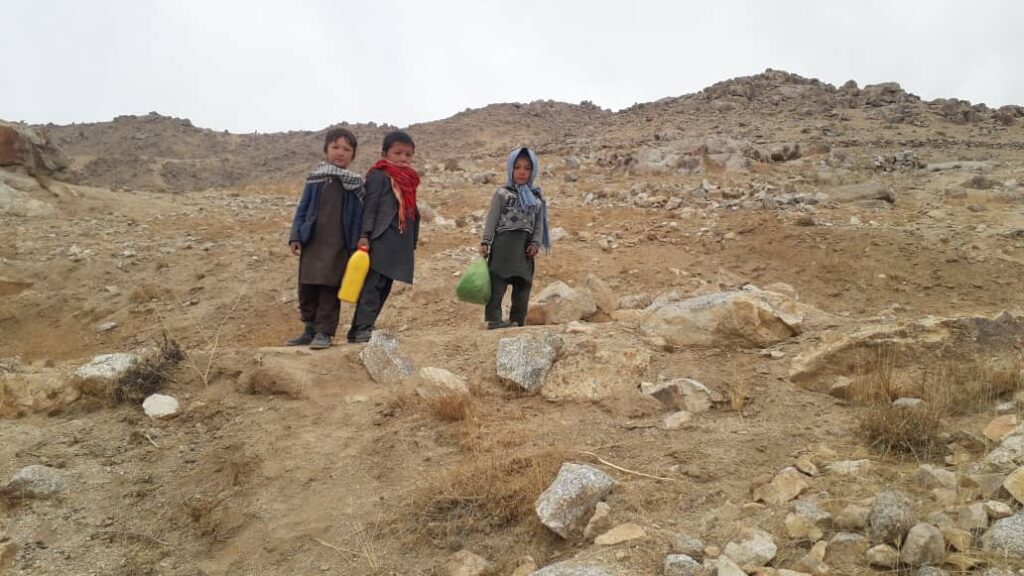
This economic collapse has created the worst humanitarian disaster in the world. 95-98% of the population do not have the means to buy enough food to meet their caloric and nutritional needs, and have to cut back on meals.[1] According to the comprehensive Integrated Food Security Phase Classification assessment by FAO and partner organizations, in Afghanistan today, 23 million people suffer from high levels of acute food insecurity. Roughly 9 million people among them are in an emergency situation, on the verge of famine[2]. If these people do not receive support, the situation will turn into famine, meaning large numbers of people will die of starvation.[3]
In Afghanistan today, we find the largest number of people facing a food emergency in the world. However, as all areas are accessible today due to the end of conflict there are no pockets of famine in Afghanistan[4].
The UN has warned that if the crisis in Afghanistan is not addressed urgently, a million children could die this winter of starvation and malnutrition related disease. Hospitals are already inundated with babies and toddlers suffering from severe acute malnutrition. Extreme food deprivation weakens the body making it more likely that people will succumb to infectious diseases. While there is no comprehensive real-time monitoring of children dying in Afghanistan, it is widely feared that what is seen in hospitals today is just the tip of the iceberg.[5]
While the humanitarian situation in Afghanistan has been dire for many years now, since summer there has been a staggering deterioration. Before the onset of the current crisis, extreme poverty was a mainly rural phenomenon with better economic opportunities for people living in cities.[6] Now, job opportunities in the cities have vanished. Rural areas are indirectly affected by the economic collapse as many households in rural areas depended on help from family members who were working in the cities. The most recent assessment by World Food Programme shows that the number of people employing emergency coping strategies to secure their nutritional needs increased five-fold since August 15th, from 11% to 57%. Such coping strategies include liquidating assets, parents restricting their consumption to feed their children and cutting back on nutritionally rich food types. Before the onset of the current crisis an average household in Afghanistan could afford animal protein or dairy approximately once a week, but now these food types are out of reach for most, with the average household consuming dairy or animal protein on less than one day a month. Vegetables are consumed about once a week and fruits every other week.[7]
If the current crisis is not addressed, more people could die due to the economic collapse in Afghanistan than due to the fighting in the Afghan American war. The Costs of War project of University of Brown University estimates that 176 000 people were killed in the conflict, among them are roughly 48000 civilians, 69,000 Afghan National Defense and Security Forces and 53,000 Taliban fighters. These numbers are estimates as in particular the number of fallen Taliban fighters was not regularly monitored.
There are only very rough estimates available as to the number of people who are dying due to the economic collapse. Given that humanitarian aid is currently being delivered, some of the worst-case outcomes, e.g. a full-blown famine this winter, will most likely be avoided. However, 8.74 million people are estimated to be living in a food emergency situation, and this implies that for each 10,000 people 1 to 2 people die every day due to starvation or related illnesses. For the months spanning from November 2021 to March 2022, this implies deaths on a scale of 132,000 to 264,000.
While we can clearly see the devastating effects of the crisis in Afghanistan, without a dedicated monitoring effort there can be no sound assessment of the humanitarian toll of the current economic collapse. All the numbers currently circulating seem to be guestimates at best, mixing different assumptions. What is clear is the stark deterioration of living conditions in particular in cities and that the most vulnerable, in particular babies and toddlers, are already succumbing to starvation. In the 21st century when global food production would easily suffice for 12 Billion people or more, human beings dying of starvation is an incomprehensible policy failure that needs to be avoided at all costs.[8]
References
[1] World Food Programme Food Security Update, January 7th, 2022
[2] The IPC assessment was done early on in the crisis and might not wholly capture the extent of the crisis. So, according to IPC, 15% of the Afghan population are classified as food secure, whereas more recent World Bank surveys find that only 5% of the population have enough to eat. https://www.ipcinfo.org/fileadmin/user_upload/ipcinfo/docs/IPC_Afghanistan_AcuteFoodInsec_2021Oct2022Mar_report.pdf
[3] For the IPC to declare a famine in a specific area, three criteria need to be fulfilled: More than 20% of the population face extreme food deprivation, i.e. they have no food at all, more than 30% of children experience acute malnutrition, i.e. wasting, and the crude death rate from starvation and malnutrition related causes increases to at least 2 deaths per 10000 people per day. Since the IPC classification was introduced in 2004, a famine has been declared only two times, in Somalia in 2011/2012 and in Sudan in 2017. If a famine needs to be declared today, this indicates a disastrous policy failure of the international community.
[4] In contrast, in Ethiopia the Tigray region is suffering from a blockade and 401,000 people there are estimated to suffer from famine conditions. https://www.ipcinfo.org/fileadmin/user_upload/ipcinfo/docs/IPC_Ethiopia_Acute_Food_Insecurity_2021MaySept_national.pdf
[5] https://gandhara.rferl.org/a/afghan-children-starving-hunger/31676418.html
[6] https://www.afghanistan-analysts.org/en/reports/economy-development-environment/killing-the-goose-that-laid-the-golden-egg-afghanistans-economic-distress-post-15-august/
[7] World Food Programme Food Security Update, January 7th 2022