
On Friday, 11th of February, the Biden administration announced that it will seek to preserve only half of Afghan Central Bank assets for the Afghan people. The rest will remain tied up in court, potentially for years.
Currently, 7 Billion US Dollar of Afghan central bank assets are frozen on US accounts. Half of the money will be kept inside the US to possibly indemnify 9/11 families who won a law suit against the Taliban in 2011. The other half of the money shall be made available to the Afghan people in a yet to be announced form. It is unclear whether the assets will eventually be returned to the Central Bank.
This decision is unconscionable. There is the glaring injustice of Afghans being punished for the 9/11 attacks – something they had literally nothing to do with. None of the 9/11 hijackers were Afghans and the Taliban had no advance knowledge of the 9/11 attacks. For 20 years Afghans have suffered war and occupation due to the 9/11 attacks, now, in their hour of greatest need they lose access to half of their assets.
The assets of the central bank consist of deposits by commercial banks on the one hand and foreign reserves on the other. Commercial banks are obliged by law to keep some of people’s savings as deposits with the central bank to be safeguarded. Now these safeguarded assets are gone. At the same time, due to the economic collapse banks portfolios are very weak with lots of non-performing loans. In this situation, losing the safeguarded deposits in the central bank will have devastating impacts on the Afghan commercial banks, many of which risk failing. No one will be willing to deposit any money in the banks for the foreseeable future.
Losing the foreign reserves will have devastating impacts on the value of the Afghan currency. Before the fall of the Republic Afghanistan ran a huge trade deficit amounting to nearly 30% of GDP. Imports need to be paid in US Dollars or other foreign currencies and the foreign reserves enabled the Afghan central bank to manage the exchange rate and always provide the necessary US Dollars to importers.
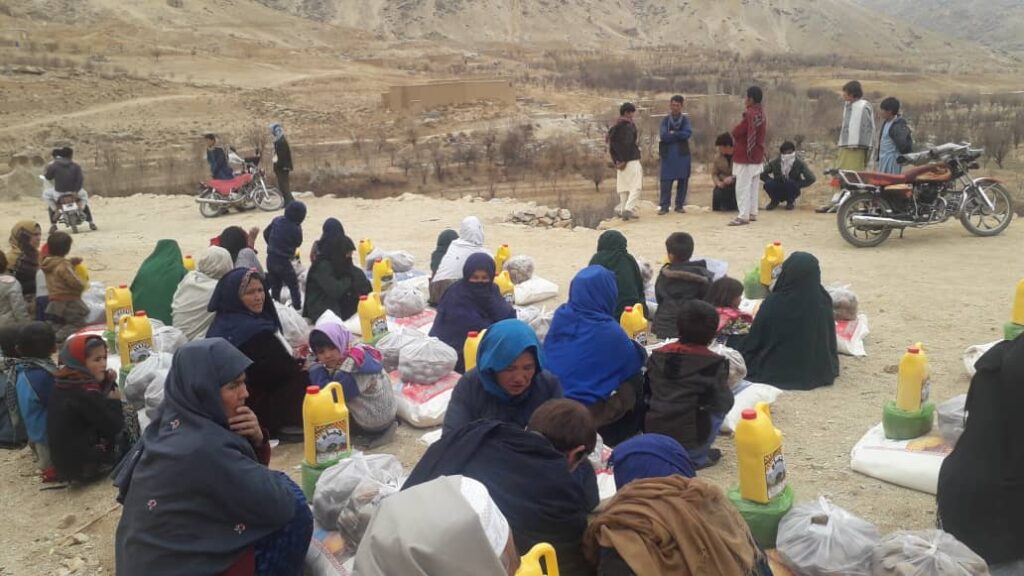
Being unable to rely on its foreign reserves Afghanistan needs to run a balanced current account to pay for its imports. This can be achieved either gradually, via increasing domestic production or abruptly, by limiting domestic consumption of imports. Unfortunately, what we are seeing today in Afghanistan is the most cruel form of “limiting domestic consumption”, people literally starving to death. Had the foreign reserves been made available to Afghans, this would have provided an economic buffer and enabled a smooth transition from a highly import dependent economy to a more self-reliant economy. This point has been explained most eloquently by Adam Tooze in a blog post this past summer: https://adamtooze.substack.com/p/chartbook-35-its-not-the-fall-that?te=1&nl=the-interpreter&emc=edit_int_20211111
In the short run, the impact of the decision to seize the Afghan assets will most likely be limited. Since January, the UN has established a financial corridor into Afghanistan, essentially flying in US Dollars and running currency auctions via private banks. Thereby UN is replacing a key function of the central bank and this has helped to stabilize the Afghan currency in the short run. While the UN efforts for Afghanistan are commendable, this is not a sustainable solution but perpetuates aid dependency. Having lost access to its foreign reserves, the fate of the Afghan currency now depends entirely on the UN and hangs in the balance once UN operations wind down.
Statement by the White House: